
Furnishing and decorating your home also means taking steps to improve the air you breathe every day. Furniture, paints, adhesives and flooring can release volatile organic compounds for weeks after installation. The A+ label helps identify building and decorating products with the lowest emissions. Every decorating choice therefore has a tangible impact on health, an aspect often missing from traditional inspiration guides.
Interior decorating and air quality: two connected issues
Replacing a floor, repainting a wall or installing a new piece of furniture releases volatile compounds into the air inside your home. Cooking, candles and incense also contribute to indoor pollution. In a recently insulated or renovated home, airtightness is often better than it was before the work.
The Construction Quality Agency points out that improved airtightness without adequate ventilation encourages condensation and mould. It recommends keeping air inlets and vents clear and leaving the ventilation system running continuously. Before choosing a colour scheme or fabric, checking that air is being properly refreshed is an often-overlooked first step.
When choosing decorating materials that support healthy indoor air, the A+ label on building products is the most reliable guide. It indicates the lowest emissions of formaldehyde and other volatile compounds. After installing new flooring or completing renovation work, airing out your home several times a day for a few days helps clear the initial spike in emissions.
Resources such as Autour 2 Moi’s home section offer decorating ideas that also take these practical considerations into account.
Renovating an older home: balancing style and moisture prevention
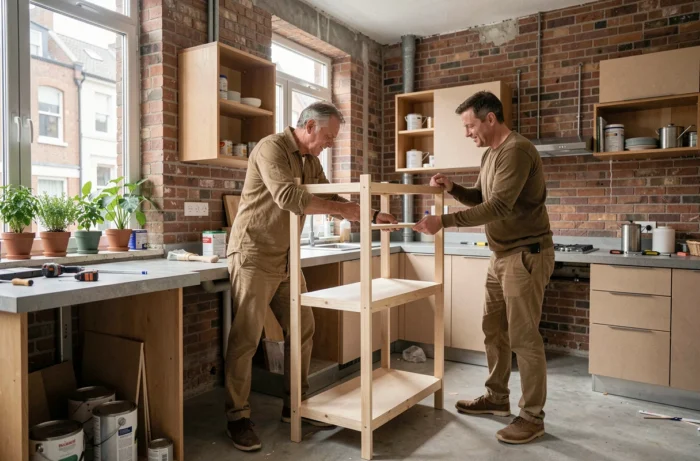
Older homes present a specific challenge: their stone or brick walls naturally breathed before insulation was added. Installing interior wall lining without addressing rising damp or providing a ventilated air gap traps moisture between the wall and the insulation. Mould can then appear within a few months, often behind furniture or in a poorly ventilated corner.
When renovating an older home, ventilation must be addressed before decorating. Installing a single-flow or humidity-sensitive mechanical ventilation system in a building that previously had none can radically change the humidity levels in its rooms. Without this essential step, even the most beautiful paint will eventually blister.
Key considerations for a decorating renovation project
- Check the condition of the windows and doors: highly airtight new windows in an older home without mechanical ventilation eliminate the natural air exchange that used to occur through the gaps around the old windows.
- Choose vapour-permeable renders and paints for old stone walls to avoid blocking moisture exchange through the wall.
- Have rising damp assessed before installing new flooring, as tiles or parquet glued to a damp slab will quickly deteriorate.
The framework for energy renovation grants has changed recently. The order relating to MaPrimeRénov’ states that certain provisions introduced by the order of 27 March 2025 apply to applications submitted from 1 July 2025. Before planning any work, check the current eligibility criteria to avoid relying on outdated information.
Furnishing your living room and bedroom: furniture choices and airflow
A well-designed living room depends less on the style of the sofa than on how air and light move through the space. Placing a large piece of furniture in front of a vent or radiator creates a cold spot behind it, where moisture can condense. Leaving at least five centimetres between the back of the furniture and the wall is enough to maintain airflow.
Furniture placement directly affects thermal comfort and the sense of space. A sofa positioned with its back against an exterior wall (often the coldest wall) shields those sitting on it from the cold surface. By contrast, an armchair placed in front of a large window benefits from solar heat in winter but can overheat in summer without shading.

Bedroom: materials and overnight air exchange
Bedrooms have particular considerations. We spend a third of the day in them, often with the door closed. Bedding, textiles and particleboard furniture continuously release volatile compounds. Choosing a solid wood bed frame instead of particleboard significantly reduces formaldehyde emissions.
Leaving the door ajar at night or installing a transfer grille beneath it (by trimming one or two centimetres off the bottom) allows stale air to reach the extract vent, usually located in the bathroom or kitchen. Without a gap beneath the door, the mechanical ventilation system cannot extract air from the bedroom.
Decorating colours and finishes: looking beyond trends
Home décor magazines focus on colour palettes without discussing the chemical composition of products. A high-end A+-labelled matt paint and an unlabelled budget paint may look identical, yet have significantly different emissions.
For flooring, natural linoleum (made from linseed oil, resin and wood flour) differs from PVC vinyl flooring, which is often mistaken for it. Natural linoleum releases very few volatile compounds and can be recycled. PVC flooring can release phthalates, especially in the first few months after installation.
- Paints: look for the A+ label and choose ranges without organic solvents for living areas and bedrooms.
- Wallpaper: the adhesives used can sometimes emit more compounds than the paper itself, so check the adhesive too.
- Wood: unfinished or oiled solid wood releases fewer emissions than melamine-faced board, whose resin contains formaldehyde.
- Textiles: new curtains and cushions should be washed before first use to remove chemical finishes.
A home that stands the test of time is built around materials chosen for both their appearance and their composition. You can decorate your home without compromising the air you breathe by making a few simple choices—provided you know what to look for before you buy.