
A machine that is too powerful unnecessarily eats into the budget and tires the operator. Conversely, an undersized model proves ineffective against dense grasses or thick brambles. Some robust gas engines require regular maintenance that is rarely anticipated.
The variety of cutting heads, the ergonomics of the handle, or the capacity of the tank often disrupt expectations. Electric options, although limited by battery life, are gaining ground among private users. Behind every technical criterion lies a compromise that does not always appear at first glance.
What needs for which garden? Understanding the importance of choice
Sorting through brush cutters starts with considering the terrain to be maintained. An area of tall grass covering a few hundred square meters requires a solid tool without becoming an anvil. For small jobs, a few borders or cleared areas, a lighter model is more than sufficient and is suitable for everyone, even those who are not used to handling motorized equipment. As soon as the terrain becomes challenging, with brambles invading and grass growing, one must then focus on power and cutting width to avoid turning each session into an endurance test.
The choice does not stop at technology. It also relates to how one will adapt to the machine: fatigue over time, comfort of the harness, tolerable noise levels, hassle-free starting. Regular users pay attention to these details. Some prioritize the discretion of the electric motor, while others prefer the robustness of a gas model, even if it means sacrificing a bit of silence.
Here’s what to keep in mind based on your garden’s configuration:
- For basic maintenance, prioritize manageable and easy-to-handle models.
- If the terrain is overgrown or uneven, power and endurance take precedence.
- For finishing touches, precision surpasses brute force.
Comparing models is not just about reading tables of numbers. User reviews and shared experiences are invaluable for refining one’s choice. For those looking to go further, debroussailleuse-warrior.com offers a detailed comparison that truly helps clarify things, especially for those wanting to invest in reliable equipment suited to their needs.
The technical criteria that make a difference between models
In the face of an abundant offer, every detail counts. The type of engine, whether gas, electric, or battery-powered, determines the ability to tackle the toughest vegetation. Power, expressed in watts or engine displacement, directly influences efficiency and speed of work. While gas models allow for long sessions, electric ones attract with their discretion and lower maintenance constraints.
The cutting width remains a key factor: a wide machine reduces intervention time but is heavier. It’s better to have a balanced tool, especially if regular work is planned. Comfort also comes from a well-designed harness and handles that fit well in hand.
Here are some technical elements to consider before making your choice:
- Line or blade? Nylon line performs very well on soft grass, while a metal blade tackles dense brush without flinching.
- Battery and autonomy: For battery models, capacity and charging speed make a difference, as does compatibility with other devices in the same range.
- Spool, line diameter: The thicker the line, the better it withstands robust plants.
Each type of brush cutter has its specificities. Between the lightness of a corded electric model and the freedom offered by a battery, the choice depends on the expected power, autonomy, and comfort of use. The goal: to find the right compromise for working without constraints and without unnecessary fatigue.
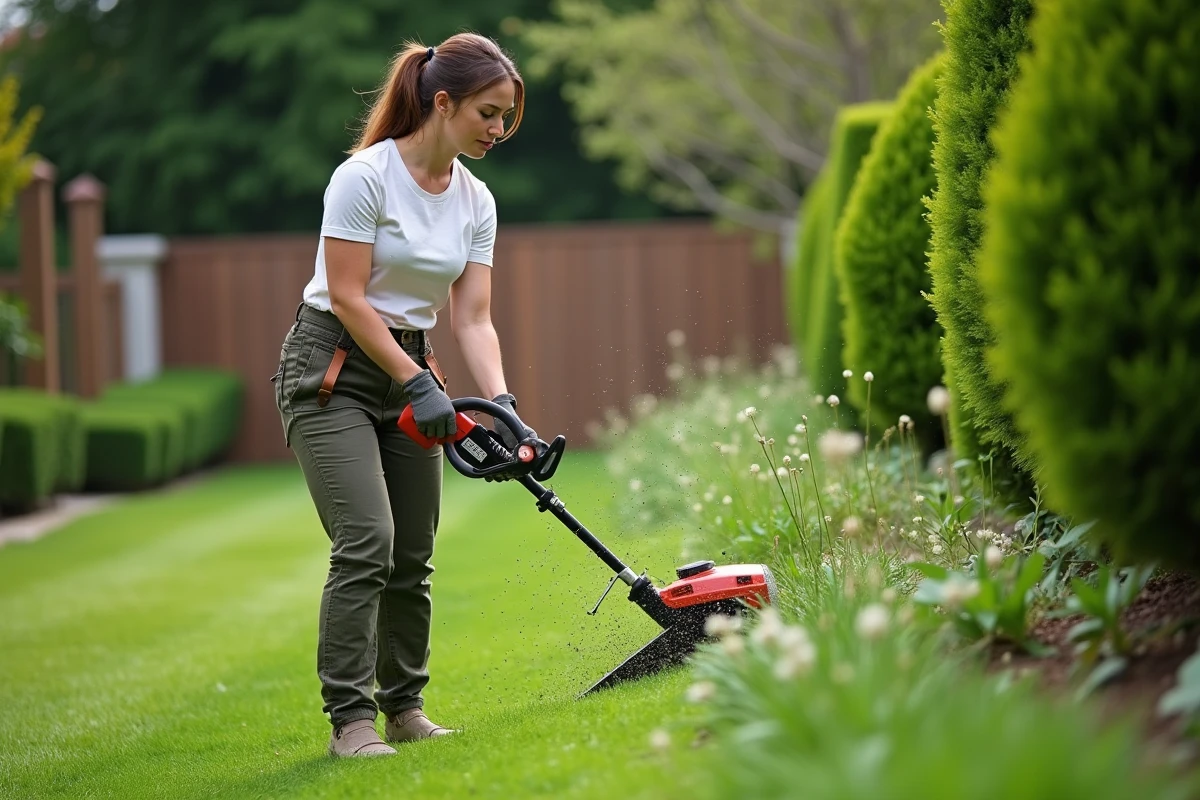
Comparison of brush cutters: finding the one that will simplify your life
In practice, reality often contrasts with theory. For precision work or careful maintenance of borders, a lightweight electric device stands out for its maneuverability. Battery models, often delivered with a charger and accumulator, free users from the constraints of a cord, which is appreciated from the first uses. Those who value sound discretion and wish to banish fuel odors will find satisfaction. Starting without mixing or unnecessary noise: a real gain in simplicity for daily use.
Here’s a summary of what each type of brush cutter offers:
- Gas brush cutter: it unleashes its full power on tall grasses and difficult terrains. Ideal for tackling brambles and thick vegetation, it requires more strength and endurance during long sessions.
- Corded electric: perfect for reasonably sized gardens, it appeals with its simplicity. The only constraint is managing the cord, which can quickly become annoying on larger plots.
- Battery model: it’s the middle ground. Mobility, decent performance, but autonomy must be monitored depending on the density of the vegetation.
For maintaining edges or small spaces, prioritize a lightweight and maneuverable nylon line head. When faced with difficult terrain or brush, only a gas brush cutter with a blade will be up to the task. Considering the frequency of use, the area to be treated, and the type of vegetation makes all the difference: comfort and the final result depend on it, season after season.
Ultimately, choosing your brush cutter means accepting to decide between power, comfort, and actual use. What matters is being able, come spring, to tackle your garden with the tool that meets your requirements, and above all, not to turn the chore into a nightmare.