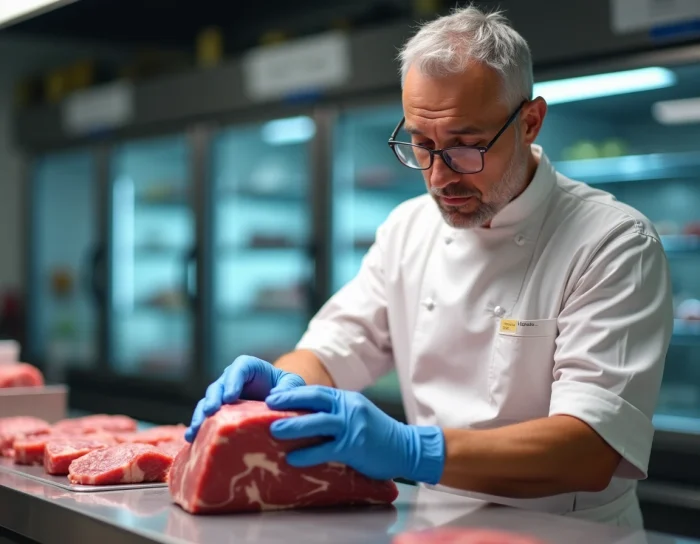
The traceability of meat at Lidl is not just a tricolor flag on the packaging. Behind the label, there is a system of lot tracking, supplier specifications, and multi-level controls that determines what the consumer is actually buying. Distinguishing between the displayed origin and operational traceability remains key to correctly reading a package on the shelf.
Lidl meat traceability: the difference between origin and supply chain tracking
The origin is the regulatory mention imposed by European law: country of birth, rearing, and slaughter for beef, and country of rearing and slaughter for pork and poultry. Lidl, like any retailer, complies with this. Strictly speaking, traceability goes further: it refers to the ability to trace each lot back to the production operator, passing through the cutting workshop and the transporter.
In practice, these two concepts coexist on the same package without the consumer perceiving the distinction. The lot number printed on the packaging allows, in the event of a health alert, to link a finished product to a specific slaughterhouse and an identified farm. This mechanism stems from the European regulation on food safety.
The corporate communication of the Lidl group, however, structures this information flow specifically according to national markets. The traceability policy of Lidl France is not necessarily the same as that of Lidl Luxembourg or Lidl Germany. The commercial partners, the referenced slaughterhouses, and the specification requirements vary by subsidiary. An article detailing the quality of Lidl meat on Cuisine Gratuite provides a comprehensive overview of the ranges available in France.
Meat labeling in large distribution: what Lidl really displays
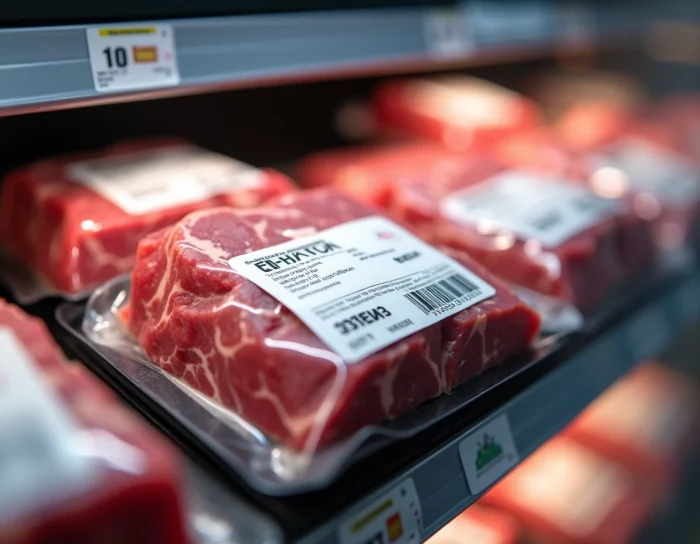
Let’s take the concrete case of ground beef. On a Lidl package of organic ground meat from the Origin Prineos range, the ingredient list often consists solely of meat from organic farming and organic pepper. A composition this short is rare in large distribution, where prepared ground steaks frequently include additives, added salt, or plant proteins.
A senior technician in dietetics, Miodrag Borges, has publicly analyzed several references sold at Lidl. His findings distinguish two categories of products:
- Raw ground meats (organic or conventional), whose composition remains simple and readable, with a clearly indicated fat content on the packaging.
- Prepared ground steaks and burgers, which may contain additional ingredients: starch, fibers, flavors, sometimes sugar. Their label requires more careful reading.
- Processed products (sausages, merguez), where the proportion of actual meat varies significantly from one reference to another. The percentage of meat displayed on the front of the packaging says nothing about the exact nature of the pieces used.
The European framework prohibits the use of synthetic additives in certified organic products. An organic ground steak cannot therefore contain artificial preservatives, which serves as a reliable marker for the hurried consumer.
Quality controls and supplier audits at Lidl France
Lidl structures its food safety around a system of partnerships with suppliers subject to internal specifications. The group claims to conduct independent audits of its partners, a common practice in discount retail, but the frequency and rigor vary from one retailer to another.
We recommend not to confuse the audits conducted by the retailer itself with certifications issued by third-party organizations. A label like Label Rouge or the Organic Agriculture certification involves an independent certifying body that checks the farmer, the slaughterhouse, and the packager. Lidl’s internal audits complement these certifications but do not replace them.
The role of the health approval number
Each package of meat bears an oval stamp with a health approval number. This code identifies the processing establishment (slaughterhouse or cutting workshop) and allows verification of its location in public databases. For beef, cross-referencing this number with the origin mention provides a precise picture of the product’s journey.
In the event of a product recall, it is this number, combined with the lot number and the expiration date, that allows targeting the affected packages. Consumers can check alerts on official recall platforms.
Lidl organic meat and labels: how to distinguish real guarantees
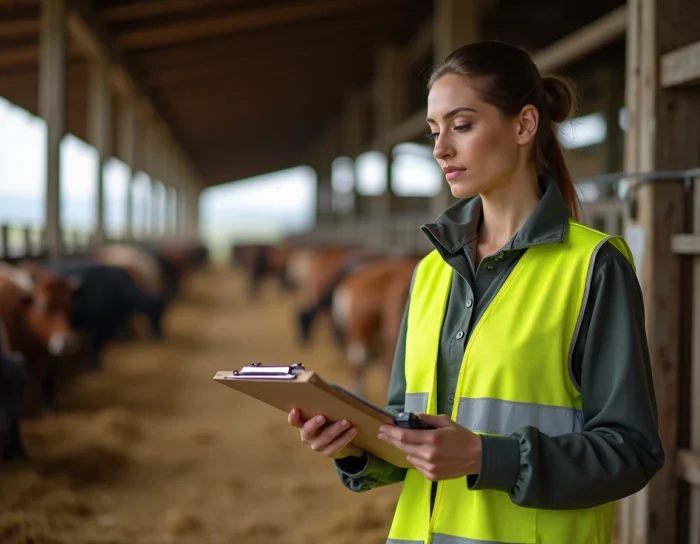
Lidl’s organic range (marketed under various private labels) complies with the European regulation on organic farming. This framework imposes specific rearing conditions: access to the outdoors, non-GMO feed, strict limitation of veterinary treatments.
A common pitfall is to equate “organic” with “local.” An organic meat sold at Lidl France may come from a farm located in another European country, as long as it meets the European organic specifications. The label then mentions “EU Agriculture” or “Non-EU Agriculture” depending on the origin.
For poultry, the mention “raised in France” is a more discriminating indicator than just the organic logo if the goal is to prioritize geographical proximity. The two criteria (organic and French origin) do not systematically overlap.
What labels say about animal welfare
The Label Rouge, present on some Lidl poultry, incorporates more demanding animal welfare criteria than the conventional standard: reduced stocking density, extended growth duration, access to an outdoor range. Organic certification also requires access to the outdoors, but with different modalities depending on the species.
Neither the organic label nor the Label Rouge guarantees local slaughter. Traceability allows tracking back to the slaughterhouse, but does not presume the distance traveled by the live animal.
Reading a meat package at Lidl with a technical eye means cross-referencing four pieces of information: the origin mention, the health approval number, the ingredient list, and any certified label. None of these elements is sufficient on its own. Their combination provides a reliable picture of what the packaging truly contains.