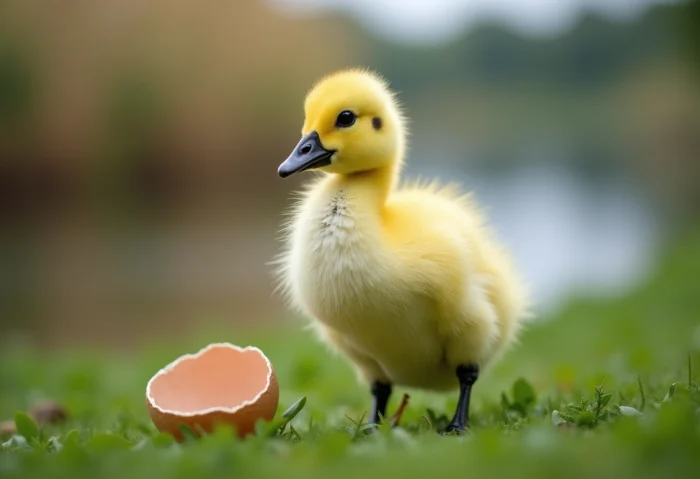
A poorly nourished gosling during its first days will develop irreversible issues, even with attentive care later on. The alternation between rapid growth phases and stagnation mainly depends on the ambient temperature and access to clean water. Frequent mistakes occur during the transfer of the brood to an outdoor environment or during the dietary transition. Certain steps, sometimes overlooked, determine the robustness and sociability in adulthood. Understanding these critical moments limits risks and optimizes rearing from hatching.
Understanding the life cycle of the gosling: from hatching to independence
Being born in a shell, then suddenly exposed to the air, defenseless against humidity or temperature fluctuations: the gosling begins its life in a fragile balance. Its down does not yet provide real protection. Everything will depend on the quality of its shelter, warmth, cleanliness, and the reassuring presence of the mother or an artificial heat source. These first moments leave no room for approximation: every detail weighs heavily in the balance.
Very quickly, the gosling discovers its peers, seeks its place in the group, learns to recognize its landmarks, to peck, to orient itself. Discreet rituals orchestrate a true organization: hierarchy, habits, cohesion. Everything is built there, in the simplicity of daily life, and already conditions the temperament of the future.
By closely following the development of the gosling, one observes a series of spectacular transformations: the first molt, the growth of real feathers, the improvement of thermal regulation, and gradually access to a relative dietary independence. An attentive breeder will be able to identify these stages, adjust the support, adapt the food, and monitor integration into the group. Gradually, experience allows anticipating each change, giving each young gosling a real chance to thrive.
What essential care is needed to support the growth of the gosling?
Caring for a gosling means primarily ensuring its living environment and the composition of its daily ration. Right after hatching, warmth is crucial: it needs between 28 °C and 30 °C, provided by the mother or under a well-regulated heat source. Too much humidity, and the entire development falters. Damp down offers no defense: diseases, fatigue, and stunted growth set in very quickly. The diet must support growth: proteins, vitamins, everything must be calibrated to build strong muscles and arm the immune system. And water, always within reach, must be clear and frequently renewed: it hydrates, allows the young bird to clean itself, and regulates its internal temperature.
Here are the daily actions to establish to maintain a healthy environment:
- Change the water several times a day to avoid stagnation and any risk of contamination.
- Renew the bedding daily to ensure a dry and comfortable living area.
- Monitor and act to keep excessive humidity away from resting areas, or risk degrading the down.
Daily observation remains valuable: less shiny plumage, slowed weight gain, abnormal posture… These signals should alert to act quickly and contact a specialized veterinarian if needed. The progress of young geese also depends on good monitoring: adjusting the temperature, varying materials to stimulate curiosity, observing group life. Over time, even a novice breeder learns to detect these indicators that make a difference.
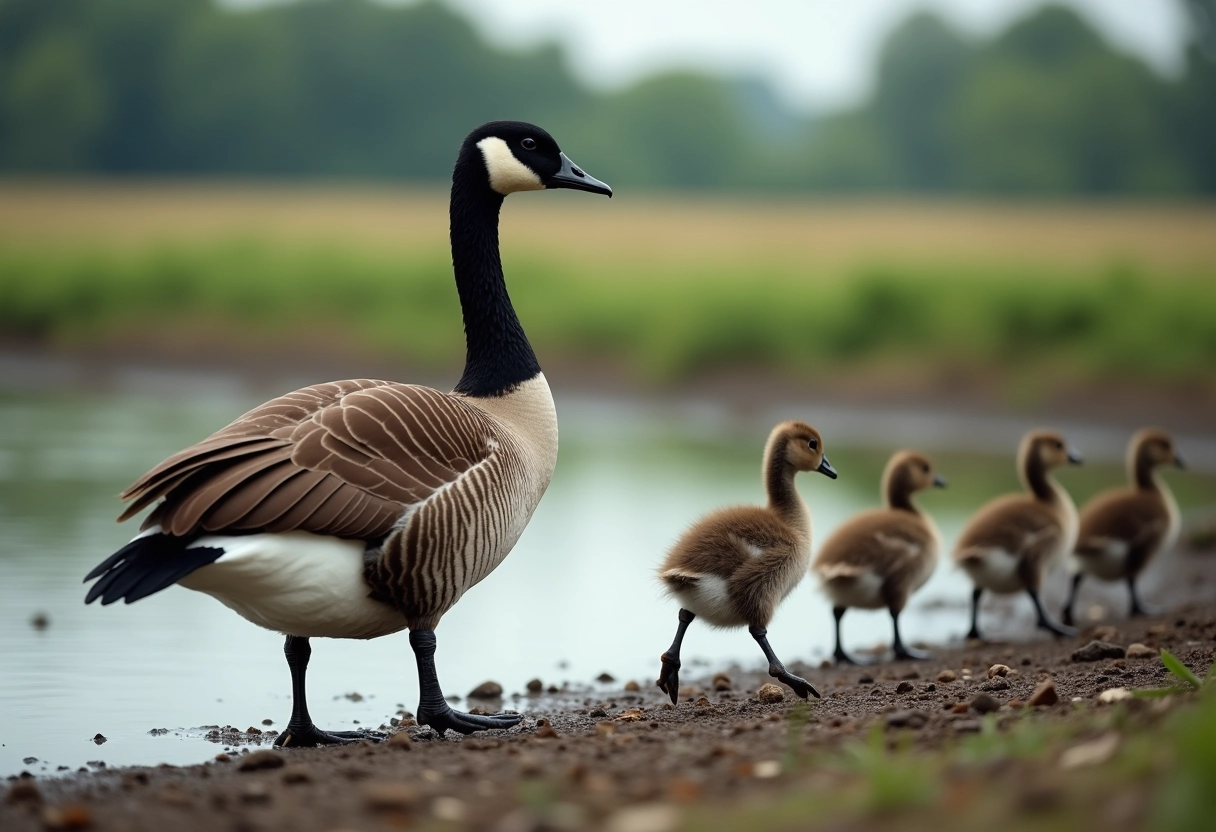
Common mistakes to avoid when raising a baby goose
Too often, failures are explained by avoidable clumsiness. A diet low in proteins or vitamins hinders growth, exposes the gosling to insufficient natural defenses, and makes it vulnerable. A sudden dietary change, without a gradual transition, quickly leads to digestive problems.
It is not enough to provide shelter: if not managed properly, humidity invites itself and parasites proliferate. Neglected bedding, dirty water, or soaked down during the night can sometimes lead to the death of the most fragile. To prevent these inconveniences, it is essential to adopt several reflexes that change the game:
- Check the bedding frequently to keep it dry and healthy.
- Replace the water daily to avoid bacteria and contamination.
- Allow the gosling to grow and gain confidence before encouraging it to explore outside: it needs this consolidation phase.
An unexpected challenge may also arise: ignorance of the regulations surrounding breeding. This gap can sometimes turn a peaceful adventure into a burdensome journey, especially when it comes to selling animals or organizing a transformation. At every stage, learning is shared, from the goslings to the breeder themselves. The most observant adjust their approach, refine their actions, and strengthen the group’s cohesion. The growth of a well-monitored gosling is already the promise of a lively and sociable goose, ready to face whatever outdoor life has in store. Between rigor and attention, an entire generation of geese is being built, determined to take flight.