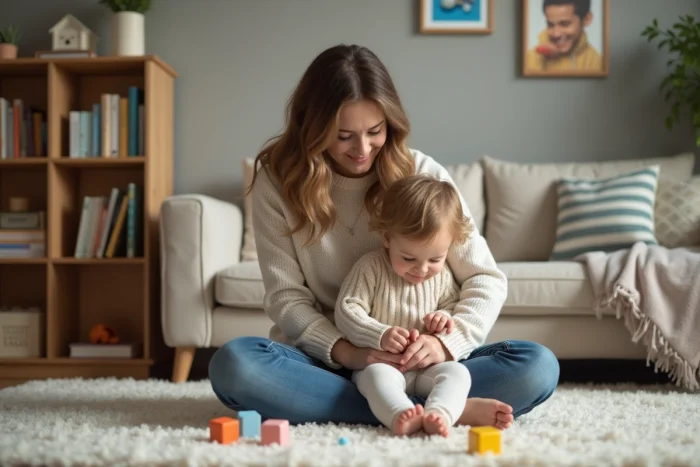
A newborn does not fully distinguish colors until the age of three months. Some children walk before they say their first words, while others prioritize language from the first year. Acquisitions follow a general order, but the timeline varies from one individual to another.
Significant variations exist in the emergence of motor, language, or social skills. The milestones proposed by professionals serve as indicators, not strict timelines. Individual trajectories can be concerning, while they often fall within the normal diversity of development.
Child Development: Understanding the Essentials to Better Support
For a child, growing up means going through a series of discrete and sometimes rapid changes. In the first months, everything begins with sensory exploration: every glance, every sound, every clumsy gesture shapes a world to be tamed. Gradually, motor skills become refined, the voice finds its place, and interactions multiply. Around the age of one, the child attempts their first steps, utters their first words—moments that disrupt family balance and mark a new stage towards autonomy. But each journey is unique, each rhythm singular.
Scientific studies, relayed by the World Health Organization, emphasize this diversity. Some children show verbal ease very early, while others are more comfortable in movement. This plurality is not alarming: it reflects the richness of individual stories. Identifying the key stages of development allows for supporting the child without trying to force them into a mold. Parents, on the front lines, become attentive observers, discreet guides, and caring supporters.
Each age comes with specific needs. It is just as much about providing emotional security as it is about offering appropriate stimulation, setting reassuring limits while allowing space for exploration. To better understand these issues, reliable resources exist. The Concept Enfance website offers a clear overview of pivotal moments, signals to watch for, and concrete suggestions to adapt support.
Accepting the child’s rhythm means choosing patience and trust. The milestones serve as support, not prescriptions. Supporting their development means providing a secure framework and encouraging their initiatives, never forgetting that each story is written in its own way.
What Are the Major Stages of Growth from Birth to Childhood?
Child development, from birth to childhood, follows a succession of significant stages. From birth, daily life revolves around sleep, feeding, and care. The little one becomes attached to faces, captures voices, and opens up to the world through contact and exchanges. Quickly, physical progress becomes evident: postural control, coordination of movements, discovery of their own body. By around six months, they sit up, grasp objects, and explore their environment.
Then language takes shape. Babbling, first words, and then more structured sentences: each stage opens new horizons. The child pushes the boundaries of their world. By two years old, the famous “no” phase signifies the emergence of a will of their own. Frustrations, intense emotions, and first social rules intertwine and shape personality. Imitation, play, and learning boundaries become valuable tools in social and emotional construction.
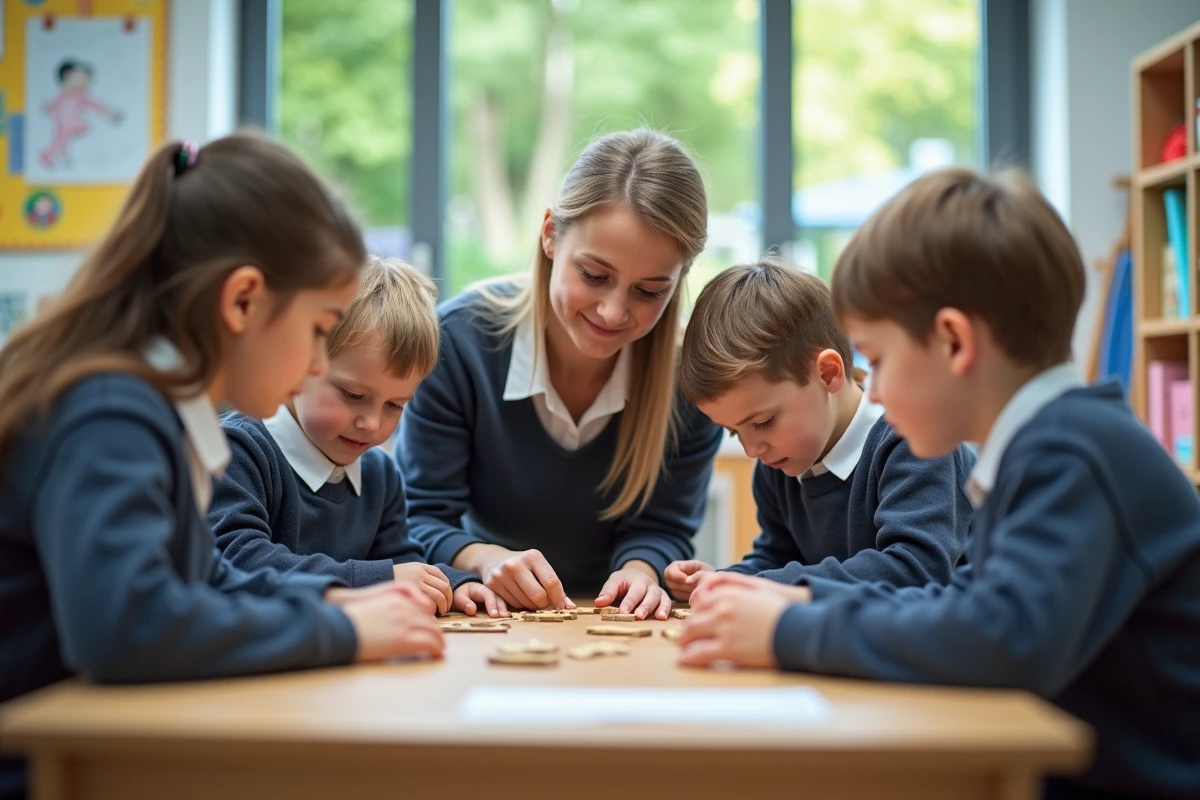
By preschool age, reflection sharpens. Memory, reasoning, and time management emerge. Group play, starting school, and community life disrupt established norms. The child learns to compose, cooperate, and focus on new tasks. But there is no universal timeline: each child progresses at their own pace, revealing the infinite variety of profiles and modes of acquisition.
The World Health Organization states: development relies on the intertwining of biology and experience. Knowing how to observe, adjust support, and encourage without imposing: this is how we support the fundamental stages of development, from birth to school entry.
Practical Tips to Address Specific Needs at Each Age
Infant: From Security to Discovery
To support the infant in their first months, several simple actions make all the difference:
- Prioritize contact: carrying, rocking, and exchanging glances provide comfort and foster the first social bonds.
- Respect rhythms: ensure to adapt sleep, feeding, and wake times without trying to accelerate acquisitions.
Early Childhood: Encouraging Autonomy and Confidence
From the moment they start walking, the child demands more independence. Here’s how to support this stage:
- Encourage exploration: create a secure space that allows for manipulating various objects and moving freely.
- Support emotional management: put words to what they feel, establish reassuring routines.
Preschool and School Age: Supporting Learning and Socialization
At school and at home, certain levers enhance learning and autonomy:
- Listen actively: encourage expression through questions, stories, and symbolic play. It is through exchange that language flourishes.
- Encourage autonomy in daily life: let the child choose their activities, dress themselves, and tidy up their belongings. Every small gesture supports self-confidence.
- Value effort: emphasize the journey taken, show that mistakes are part of learning.
A well-structured daily routine also benefits development: a varied diet, quality sleep, and regular physical activities form a solid foundation. A calm family environment, where listening and kindness prevail, protects mental health and fosters the child’s flourishing. This journey requires patience, attention, and adaptability, but it allows for providing each child with a framework where they can grow in confidence, at their own pace. The adventure of growth is not just a series of steps to check off; it is invented day by day, alongside those who surround them.